A comparison chart maker takes data sitting in a spreadsheet, a CSV file, or a database and turns it into something a reader can actually scan, a sortable table or a side-by-side chart, without anyone touching code.
That’s different from opening a full business intelligence platform. WordPress site owners, marketers, and journalists reach for a chart maker when the goal is one published comparison, not an internal dashboard someone logs into every morning.
WordPress runs 41.2% of all websites globally, according to W3Techs (2026). That scale alone is a big part of why wpDataTables, a WordPress-native table and chart plugin, opens this list.
Table of Contents
The best comparison chart makers, ranked
Ranking these ten wasn’t about picking favorites. The strongest all-around option sits at the top, then the list spreads out by who’s actually using it, agencies and store owners first, free spreadsheet tools near the bottom.
Every entry below covers what it does well, what it costs, and where it falls short.
A few numbers worth knowing up front:
- wpDataTables Premium runs $59/year for a single site license (SaaSHub, 2026)
- Tableau Creator lists at $75/user/month billed annually (Vendr, 2026)
- Canva Pro costs $18/month, or $144 billed annually (Usecarly, 2026)
- Datawrapper’s Pro plan runs $21/user/month to remove attribution and unlock SVG/PDF export; Business runs $39/user/month for teams needing waterfall and dual-axis charts (Datawrapper, 2026)
- Venngage Premium starts at $10/month on annual billing (Venngage, 2026)
| Use case | Best pick | Why |
|---|---|---|
| WordPress sites | wpDataTables | Database-driven, dynamic tables and charts |
| Enterprise BI | Tableau | Deep, multi-source analysis |
| Marketing collateral | Visme | Branded templates across formats |
| Free spreadsheet work | Google Sheets | No added cost, built-in charts |
| Journalism and publishing | Datawrapper | Clean, fast embeds |
| Data storytelling | Flourish | Scroll-based, animated visuals |
wpDataTables, best for WordPress sites that need dynamic, database-driven comparison tables
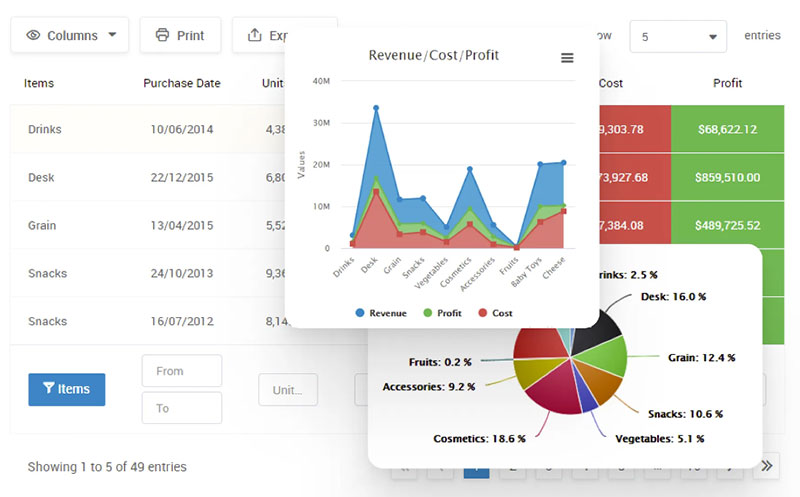
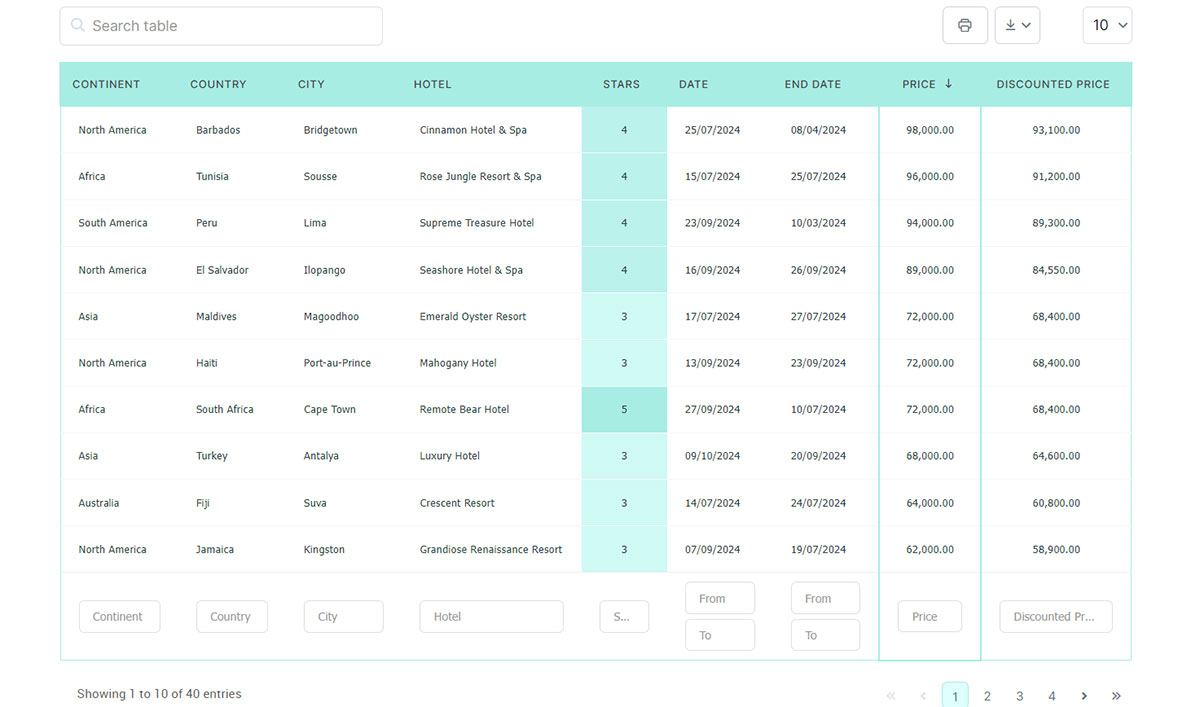
A pricing page that changes every month shouldn’t have to be rebuilt in raw HTML every month. That’s the exact problem wpDataTables was built to solve.
It pulls live data from a spreadsheet or a database straight into a sortable, filterable table or chart. For a product catalog or price list that updates often, it’s the strongest option on this list.
Who it fits: agencies and store owners get the most out of it, mainly because the tables update on their own once the underlying data changes. Nobody has to open the post and manually edit a row.
The standout part, honestly, is that it runs on four separate chart engines you can swap between: Chart.js, Google Charts, HighCharts, and ApexCharts. Most teams would otherwise buy two or three separate tools to cover that same range of rendering styles.
What it actually does, in practice:
- Builds a full comparison table from MySQL, Excel, CSV, or a JSON data source
- Lets visitors or staff edit rows on the front end, no trip into wp-admin required
- Handles table pagination, multi-column filtering, and search out of the box
- Highlights the best value in a row or column through conditional formatting
Pricing: a free Lite version covers the basics. Premium starts at $59/year for one site, and lifetime licenses are also on offer if you’d rather not think about renewals.
It handles large datasets without dragging the page down, and it works inside pretty much any WordPress theme without a coding background.
The learning curve is real for a first-time user though, and some of the more advanced filtering sits behind a paid add-on.
One thing worth flagging: for most of 2026, building a table meant working in a separate dashboard and dropping the result into a post as a shortcode, since there was no dedicated Gutenberg block yet. That changed at the end of July 2026, when an update added a native Gutenberg block, so tables and charts can now be inserted and configured straight in the block editor instead of through shortcodes alone.
Most tools in this category force a choice between a spreadsheet-style editor and a coded chart library. This one doesn’t. A non-developer can build the table by hand, then hand that same dataset to a developer for a custom chart, without exporting anything in between.
Tableau, best for enterprise teams doing deep, multi-source analysis
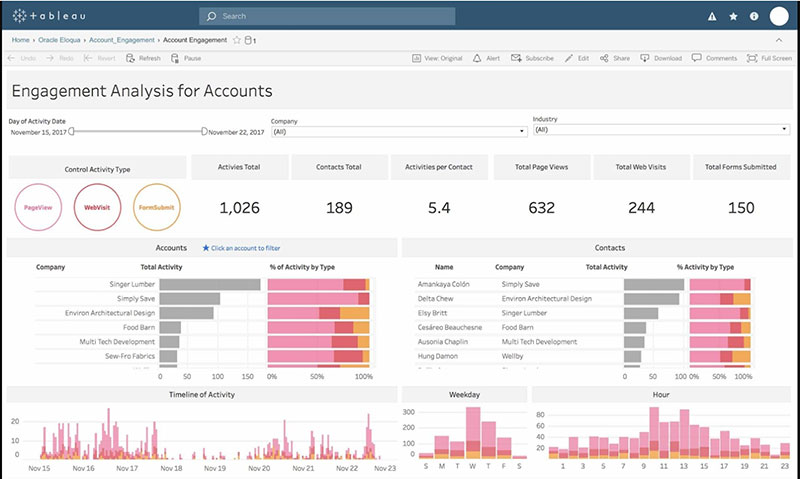
Tableau isn’t really competing with the rest of this list. It’s a business intelligence platform first, and teams reach for it when a comparison needs to live inside a bigger dashboard pulling from several data sources at once, not when someone just needs one chart for a webpage.
Who it fits: analytics teams comparing performance across regions, products, or time periods get the most value here, largely because handling large, joined datasets is what the tool was actually designed around. Drill-down isn’t bolted on as an afterthought, it’s core to how the thing works.
Under the hood:
- Live connections to databases, cloud warehouses, and APIs
- A drag-and-drop dashboard builder with cross-filtering
- Tableau Prep for cleaning data before it ever reaches a chart
- Row-level permissions so the same dashboard can be shared safely across departments
Pricing: the Standard edition of Tableau Cloud runs $75/user/month for Creator, $42 for Explorer, and $15 for Viewer, all billed annually (Vendr, 2026). Tableau Public is free, but it publishes every workbook openly, which rules it out the moment private client data is involved.
The depth here is genuinely unmatched for statistical comparison work, and the community template library is strong.
But the price is steep for a small team, and the learning curve is not exaggerated. Budget real training time before expecting polished output.
Teams that only need one or two published charts a month routinely end up paying Creator-tier prices for what amounts to Viewer-tier usage. That mismatch, not the software itself, comes up again and again in 2026 buyer reviews.
It’s the only tool on this list built to compare data across joined tables in real time. If the whole comparison lives in one spreadsheet, this is overkill. Developers who outgrow drag-and-drop tools sometimes move to code-based libraries like HighCharts instead, once the dashboard requirement goes away.
Visme, best for marketing teams building branded comparison content across formats

Visme sits closer to a design tool than a data tool. It turns a comparison into a polished graphic, a slide, or a one-pager without ever asking someone to open a spreadsheet formula. Which is exactly why marketing and content teams gravitate toward it over analysts.
Who it fits: content and marketing teams building product comparison graphics for landing pages or decks.
What makes it worth mentioning: the same dataset can feed a chart, an infographic, and a slide deck at once. One comparison, built one time, gets reused across three formats instead of rebuilt from scratch each time.
It comes with:
- A drag-and-drop chart generator covering animated and interactive chart types
- A brand kit that locks fonts and colors across every export
- An AI Designer that turns a rough data table into a styled layout
- Exports to PNG, PDF, HTML5, and PowerPoint
Pricing: Basic is free, but every export carries a watermark. Starter runs $12.25/month billed annually, and Pro runs $24.75/month with more AI credits and full brand kit access (Visme, 2026).
Testing the free tier makes the watermark restriction obvious pretty quickly. Anything client-facing means paying for Starter at minimum, the free plan works more as an extended trial than something you’d actually ship with.
The template library is strong and it’s fast to get client-ready visuals out the door. But the AI credits reset monthly and don’t roll over, and heavier data work like large joins or live database sync just isn’t what it’s for.
Most chart tools stop at the chart itself. Visme’s real value is the packaging, the same comparison becomes three deliverables without anyone rebuilding it three separate times.
Venngage, best for marketers turning comparison data into infographic-style visuals fast
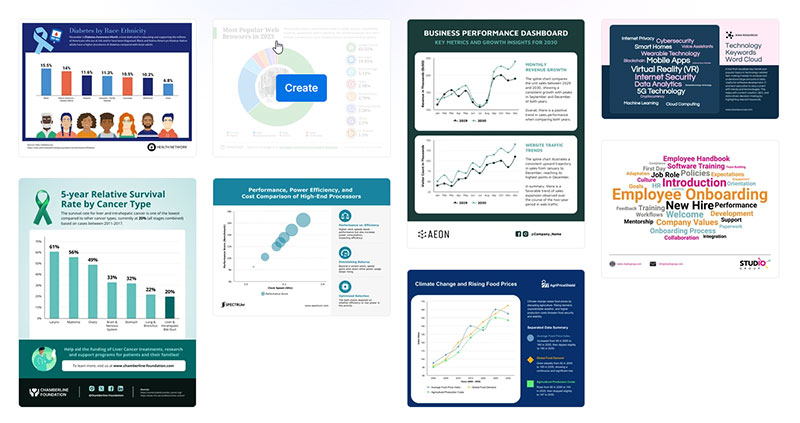
Venngage leans further into infographic design than anything else on this list. It’s built around templates, including dedicated pricing table and feature-comparison layouts, so a comparison chart looks finished within minutes of opening one.
Who it fits: solo marketers and small teams without a design background tend to get the most out of it.
What sets it apart is a template library built specifically around comparisons: pros and cons grids, versus layouts, pricing tiers. Rather than generic chart shapes you’d have to adapt yourself.
Feature set:
- Thousands of infographic and comparison templates
- DesignAI auto-generates a first draft from raw text or data
- My Brand Kit keeps colors, logos, and fonts consistent
- PNG export standard, PowerPoint export on higher tiers
Pricing: a free plan exists but it’s limited for commercial use. Premium starts at $10/month billed annually ($19/month if billed monthly), and Business runs roughly $39 to $49/month depending on the source (Capterra, SaasWorthy, 2026).
It’s the fastest path here from a blank page to a finished comparison graphic, and it’s affordable to start.
Customization is more limited than a full design tool though, and more than a few reviewers describe the free plan as feeling like a demo rather than something usable long-term.
User reviews through 2026 keep repeating the same pattern: people upgrade from Premium to Business specifically for editable PowerPoint exports, not for more templates. Worth knowing before picking a tier.
For a one-off pricing or feature comparison, nobody should reach for Venngage to manage an actual live dataset. But it beats building the same graphic in a general design tool from scratch, and it’s the quickest tool here for exactly that job.
Google Sheets, best for teams that want free, collaborative comparison charts inside a spreadsheet
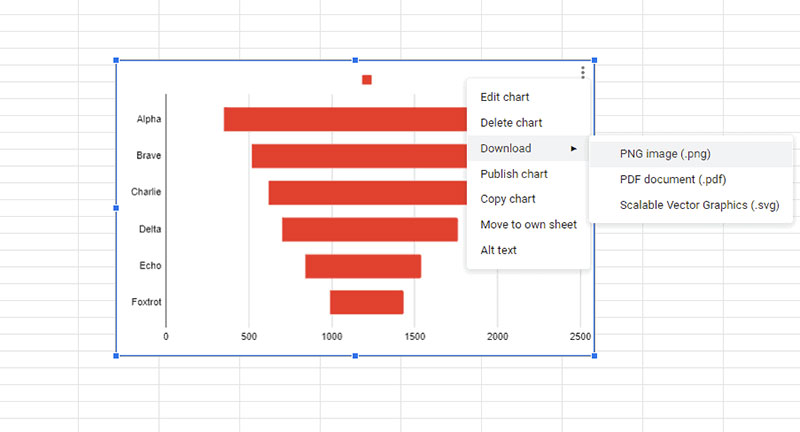
Google Sheets was never built as a dedicated chart maker. But its built-in charting covers most simple comparisons at no extra cost, and multiple people can edit the same table in real time. Which makes it the default for teams already living inside Google Workspace.
Who it fits: teams that want a shared, editable comparison chart without buying new software land here first.
Real-time multi-user editing is the standout feature. No export-and-reimport cycle between people updating the same comparison, no waiting for someone else to finish and send a new file.
What it includes:
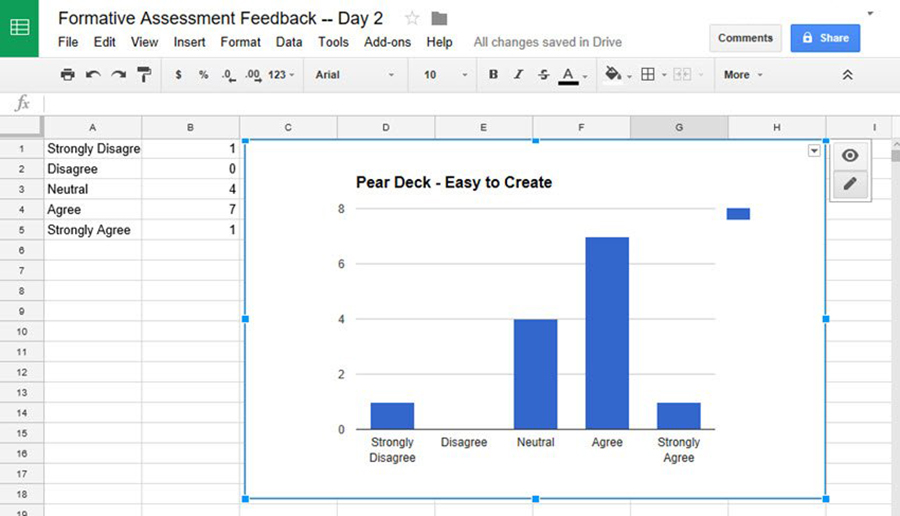
- Native bar, line, and pie charts alongside pivot tables
- Conditional formatting to highlight winners in a comparison row
- Publish-to-web to embed a live, auto-updating chart directly
- Free integrations for teams who want to visualize Google Sheets data somewhere else entirely
Pricing: free for personal use. Business use through Google Workspace Business Starter runs about $7/user/month billed annually, or $8.40/user/month on flexible monthly billing, and that includes Gmail and Drive on the same plan (Google Workspace, 2026).
Anyone who’s used a spreadsheet before hits zero learning curve here, and the real-time collaboration genuinely works.
Chart styling is basic compared to a dedicated design tool though, and formulas get fragile once a sheet grows past a few hundred rows.
Teams that outgrow it tend to hit the same wall: chart customization stalls out, so the data gets exported into Datawrapper, Visme, or a coded chart library once the audience moves beyond an internal team.
Everything else on this list costs something eventually. Sheets is the one entry a small team can keep using indefinitely for internal comparisons without ever paying for a chart feature specifically.
Canva, best for non-designers who need a polished comparison graphic quickly
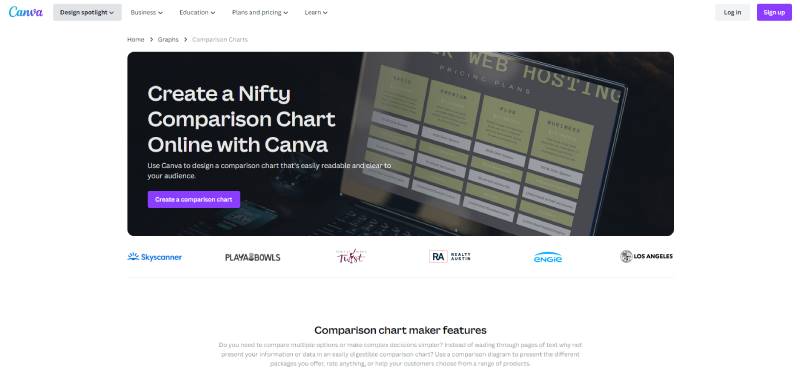
Social media managers and small businesses making one-off comparison graphics are the audience Canva was actually built for, at least for this use case.
It’s a general design tool with chart blocks bolted in, not a data platform, and it wins whenever someone needs a good-looking comparison graphic and has zero interest in learning a separate charting tool.
The biggest advantage is scale: the largest stock and template library of any tool here, so a comparison graphic can match an existing brand look inside a few minutes.
Feature set:
- Drag-and-drop chart blocks covering most common chart types
- Magic Resize turns one comparison graphic into every social format automatically
- Background Remover and transparent exports on paid tiers
- Real-time team collaboration and commenting
Pricing: the free plan includes 5GB of storage and basic charts. Pro runs $18/month, or $144/year, which works out to roughly $12/month on annual billing (Usecarly, 2026).
It’s genuinely the fastest tool here for a brand-consistent one-off graphic, and the template selection is huge.
Chart data has to be entered or pasted in manually though, there’s no live database or API connection, and Pro is a single-user license, so teams get pushed toward the pricier Business plan pretty quickly.
The free plan is actually usable, not a stripped-down demo. But premium chart elements and background removal sit behind Pro, worth checking before assuming a graphic is fully free to publish.
Canva’s comparison charts will never touch a data tool for accuracy on a large dataset. For a single graphic that needs to look professional in ten minutes, nothing here beats it.
Datawrapper, best for journalists and publishers who need clean, embeddable charts
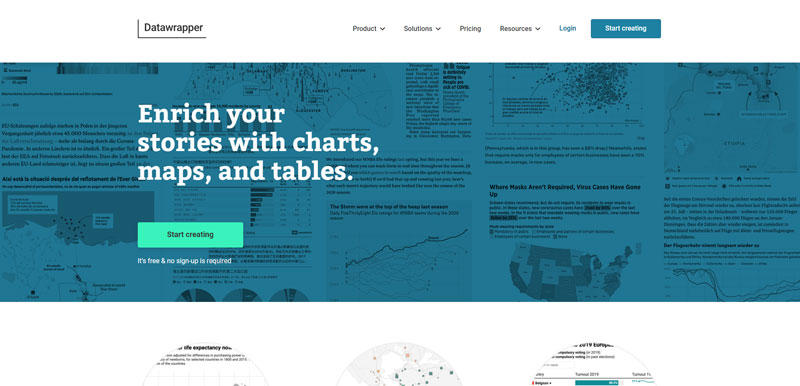
Newsrooms built Datawrapper, and it shows. Charts default to a clean, minimal style that reads well on a page full of text, and every chart ships with a responsive embed code that works on almost any CMS without a fight.
Who it fits: editorial teams and data journalists publishing comparison charts inside articles are the natural fit here.
The chart defaults themselves are the real advantage: tuned for readability on a page full of running text, not for a slide or a social post where the design rules are completely different.
What it offers:
- Bar, line, and range charts optimized for editorial use, plus locator maps
- Direct Google Sheets import keeps charts live and updating
- Embeds that adapt automatically to whatever width the host page happens to be
Pricing: the free plan allows unlimited charts, maps, and tables, with a “Created with Datawrapper” credit line attached. Pro runs $21/user/month and removes that attribution while adding PDF and SVG export. Business runs $39/user/month and adds waterfall and dual-axis chart types plus more granular team permissions. A fully custom, white-labeled visual theme is a separate add-on starting at $499/month (Datawrapper, 2026).
The free tier is genuinely generous, publishing is fast, and the accessibility defaults are strong right out of the box.
Per-seat pricing on Pro and Business adds up for larger teams though, and a fully custom brand theme costs extra on top of an already-paid plan.
Newsroom teams switching over from other tools tend to cite the same reason: more granular control over how a chart actually looks, at the cost of a real learning curve compared to a template-first tool.
Most comparison tools optimize for a standalone graphic. Datawrapper optimizes for a chart that has to survive being dropped inside somebody else’s page layout. That’s a narrower problem, but it solves it better than any general design tool on this list.
Infogram, best for teams building interactive, report-style comparison dashboards
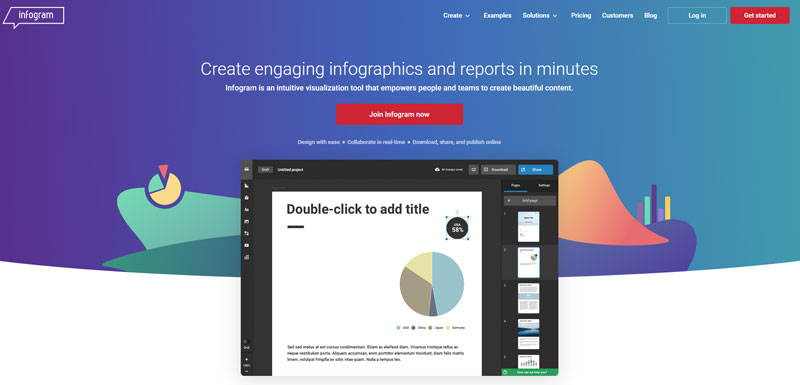
Infogram, owned by Prezi, sits somewhere between Datawrapper’s editorial focus and Visme’s design focus. It specializes in interactive charts with clickable tabs and live data connections, and it’s aimed at recurring reports rather than a one-off graphic.
Who it fits: teams publishing recurring dashboards or reports that need to stay current on their own.
Live data connections to Google Sheets, CSV, and APIs are the standout piece, meaning a published comparison updates itself without a manual re-export every time the numbers change.
Feature set:
- 35+ chart types, including animated and tabbed formats
- A report and dashboard builder for recurring publications
- Team collaboration with shared brand assets
- Direct embed plus social sharing options
Pricing: a free plan covers a limited number of projects. Pro starts at $19/month billed annually, with Business and Team tiers scaling up from there (TrustRadius, 2026).
It’s strong for recurring reporting, the live data genuinely keeps charts current, and tabbed charts pack more comparison into less screen space.
The free tier restricts downloads and adds watermarking though, and pricing climbs fast once a team needs the Business tier.
Reviewers keep flagging the same billing friction: unclear communication before renewal charges. Worth setting a calendar reminder around the annual date if you’re on a paid plan.
It fills a real gap between static graphics and full BI dashboards, a comparison chart that needs to refresh weekly without a developer touching it every time.
Microsoft Excel, best for people who already live in spreadsheets and want offline control
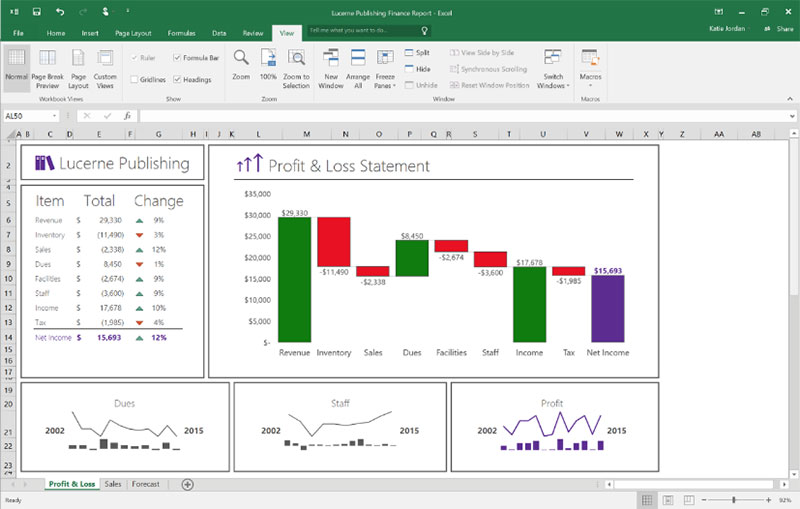
Excel is still the default in a lot of finance and operations teams, and there’s a reason for that beyond habit. It’s the workhorse behind most financial charts and graphs inside those departments, its charting is dense with options built up over literal decades, and it works fully offline, which matters more than people think in regulated industries.
Who it fits: finance and operations teams building comparison charts inside existing spreadsheet models.
Pivot charts that update instantly as underlying data changes are the standout feature, tightly linked to formulas most finance teams already rely on daily.
What it includes:
- Native bar, column, line, waterfall, and combo charts
- Pivot tables and pivot charts to slice large comparisons apart
- Full offline access, no internet dependency at all
- Formula support deep enough to handle calculated comparison metrics most other tools can’t touch
Pricing: a free web version exists with a Microsoft account. Microsoft 365 Personal runs $9.99/month with 1TB of storage and desktop Excel included. On the business side, Business Basic runs $7/user/month billed annually, following a price increase from $6 that took effect July 1, 2026 (Microsoft, 2026).
Formula depth here is unmatched, it works offline, and nearly every business user already knows their way around it.
Chart styling looks dated next to a design-first tool though, and publishing an interactive chart to the web takes extra steps Excel was frankly never built for.
Teams publishing charts publicly almost always export the final numbers into a web-first tool instead of embedding Excel output directly. The charting is strong for internal use. It’s weaker the moment the audience moves outside the spreadsheet.
For a comparison chart that lives inside a financial model and never leaves the building, nothing on this list matches Excel’s formula depth or offline reliability.
Flourish, best for storytelling teams who want animated, scroll-based comparisons
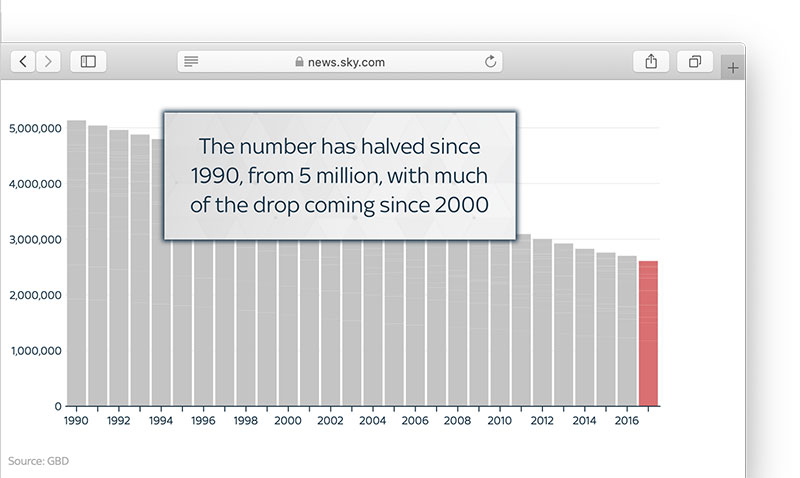
Flourish is part of Canva now (acquired back in 2021), and it’s built for data storytelling rather than static reporting.
Racing bar charts and scroll-triggered animated charts are what put it on this list. It’s the pick when the comparison itself needs to feel like a narrative rather than a static image.
Who it fits: editorial and content teams publishing a comparison that unfolds as the reader scrolls get the most out of it.
Scrollytelling templates that reveal a comparison step by step are the standout here, a format almost nothing else on this list offers natively.
Feature set:
- Racing bar and bubble charts that animate change over time
- Scrollytelling story templates for narrative structure
- Live data connections through spreadsheet or API
- ISO 27001-certified infrastructure for security-conscious teams
Pricing: a free plan covers public projects. Full access to Flourish’s Presenter-level features comes bundled with a Canva Business subscription, and premium organization plans, covering private projects, no attribution, and API access, are handled through custom contracts (Flourish, 2026).
The animated formats are genuinely distinctive, it’s strong for social and editorial distribution, and it’s backed by Canva’s whole design ecosystem now.
Free-tier projects are public by default though, and heavier customization needs a Canva Business subscription or a custom enterprise contract.
Teams that switch to Flourish from a static chart tool tend to cite the same reason: a bar chart exported as a flat image rarely gets shared twice. An animated one travels further on social feeds.
Every other tool here treats a comparison as a fixed image. Flourish treats it as a short animation. That’s a narrow use case, but none of the other nine tools cover it as well.
Where these tools stop being enough
None of the ten handle every situation, and it’s worth being upfront about where each one runs out of road.
Real-time database sync only really works with three of them. wpDataTables, Excel, and Google Sheets connect to a live source or update automatically. Everything else needs a manual re-export the moment the numbers change.
Statistical modeling belongs to Tableau alone here. It’s the only tool built for genuine multi-source analysis, the rest assume the comparison data already exists in finished form before anyone opens the tool.
True offline use comes down to one option too. Excel works with no internet connection at all. Every other tool on this list needs a live connection just to save or publish.
Picking between them really comes down to one question more than any other: does the comparison need to update itself, or does it just need to look good once?
Tools built for choosing the right chart type for live, changing data (wpDataTables, Tableau, Google Sheets, Excel) solve a different problem than tools built for a single polished graphic (Canva, Venngage, Visme).
What Is a Comparison Chart Maker
A plain spreadsheet can hold the data. A full business intelligence platform can model it. Neither one is actually built for the specific job this category exists to solve: letting a reader scan several options against the same set of attributes at a glance.
That’s what a comparison chart maker is, software that turns structured data into a visual side-by-side comparison, a comparison chart, a sortable table, or sometimes both, without anyone writing custom code.
Most tools in this category share the same handful of traits. A visual editor stands in for a coding environment. Data comes in from a spreadsheet, CSV, or database rather than getting built chart by chart from scratch. And the output is meant to be published somewhere, a website, a report, a slide deck.
The category really splits into two camps. Design-first tools lean on templates and visual polish, Canva and Venngage fall here. Data-first tools build around live sources and structured tables instead, and that’s where wpDataTables and Tableau sit.
Types of Comparison Charts You Can Build
The right chart depends on what’s actually being compared, not on personal preference. A numeric comparison across a handful of items needs a different shape entirely than a feature-by-feature breakdown across a dozen attributes.
| Type | Best for | Weak point |
|---|---|---|
| Bar or column | Comparing 2-7 numeric values | Loses clarity past 7-8 items |
| Comparison table | Feature-by-feature breakdowns | Doesn’t show scale visually |
| Radar chart | Multi-attribute profiles | Hard to read past 5-6 axes |
| Pricing grid | Plan or tier comparisons | Limited to a handful of columns |
Bar and Column Comparisons
Numeric, category-based comparisons are where this format earns its keep, things like revenue by product line, ratings across competing tools, or survey responses spread across two to seven groups.
A column chart orients the bars vertically. A horizontal bar chart handles long category labels better, which matters more than people expect once labels run past a word or two.
For comparisons with several sub-values per category, a stacked bar chart stacks the parts within one bar instead of spreading everything across separate charts.
Comparison Tables and Matrices
A comparison table lists items down one axis and attributes across the other, filling each cell with a value, a checkmark, or a short label. It works in places a chart simply can’t, anywhere the attributes being compared aren’t numeric to begin with.
A few formats show up constantly. A feature matrix uses checkmarks or short text per feature, and it’s the format behind most software pricing pages. A spec table mixes numeric and text values, which is common for physical products. A pros and cons grid runs short bullet lists per item, side by side.
Product review sites like Wirecutter lean heavily on comparison tables for exactly this reason, a chart can’t hold a text-based attribute like “battery type” or “warranty length” the way a table cell can.
Radar Charts
A radar chart plots several attributes on axes radiating out from a center point, then connects the values into a shape. Overlay two or three items on the same chart and their relative strengths and weaknesses show up at a glance, which is why the format works well for comparing products across things like price, speed, ease of use, and support quality all at once.
Past five or six axes though, the shape gets cluttered fast and the comparison stops being readable. This one works best with a tight, curated attribute list, not a full spec sheet crammed onto one chart.
Pricing Comparison Grids
A pricing grid is really just a specialized comparison table built around plan tiers, free, mid, premium columns, with feature rows stacked underneath.
It follows its own conventions too. The recommended tier usually gets some kind of visual highlight. Feature rows lean on checkmarks instead of long text. Price sits at the top, features fill out the body below it.
Nearly every SaaS pricing page uses some version of this format, which is exactly why templates for it show up as their own category in most design tools rather than getting treated as a generic table style.
How Comparison Chart Makers Turn Data Into Charts
Every comparison chart maker follows roughly the same pipeline underneath: import the data, map it to a visual structure, then render it. What differs between tools is which step gets automated and which one stays manual.
Import is the baseline everywhere, most tools accept a CSV, an Excel file, or a pasted spreadsheet range without much fuss. A smaller set of tools goes further and connects directly to a MySQL database or an API, so the chart updates the moment the source data changes instead of needing a fresh export. Rendering is the last step, where the mapped data gets handed off to a rendering engine, either something built-in, or, on developer-oriented tools, a swappable JavaScript library.
Chart.js alone accounts for roughly 54 million monthly downloads on npm, more than any other dedicated charting library, according to ApexCharts’ State of JavaScript Charting report (2026). That gives a sense of how much comparison and dashboard rendering actually runs on a small handful of shared engines rather than one-off code written from scratch each time.
Some tools also generate a table footer automatically, a totals or average row calculated from the imported data rather than typed in by hand.
What breaks most often isn’t the rendering. It’s the sync. A static export loses its connection to the source the moment someone updates the original spreadsheet, and nothing on the published page reflects the change until it gets manually rebuilt.
Features That Separate a Strong Comparison Chart Maker From a Basic One
Two tools can accept the exact same CSV file and still produce very different results. The gap tends to show up in the same few places, over and over.
- Sorting lets a reader reorder rows by any column, not just the one the chart happened to be built around, usually through JavaScript-based table sorting
- Filtering narrows results by category, price range, or keyword. The better implementations handle filtering a table with JavaScript on the client side rather than forcing a full page reload
- Collapsible detail hides secondary attributes behind an expandable row using a table with collapsible rows, useful once a comparison grows past six or eight attributes
- Conditional formatting auto-highlights the best value in a row, a cheapest price or a top rating, without anyone touching manual styling
Mobile rendering isn’t optional anymore either. StatCounter’s Q2 2026 data puts mobile devices (excluding tablets) at 51.48% of global website traffic, so a comparison table that only works at desktop width loses a significant chunk of its readers before they even scroll past the first row.
Basic tools often just shrink the whole table down, which makes the text unreadable fast. Tools built around genuinely mobile-friendly tables restructure the layout instead, stacking or scrolling columns rather than squeezing them.
One feature gets skipped more than any other, honestly: accessible table markup. Proper header association and keyboard navigation are what let a screen reader user actually parse a comparison instead of hearing an unlabeled grid of numbers read out loud.
FAQ on Comparison Chart Makers
What’s the difference between a comparison chart and a comparison table?
Bars, lines, shapes, that’s a chart, plotting values visually to show scale. A table handles it differently: rows and columns, one cell per data point, no visual scale involved at all.
Numeric comparisons suit charts best. Mixed text and numeric attributes side by side, that’s table territory.
Can you embed a comparison chart on a site without coding?
Most comparison chart makers generate a shortcode, an embed code, or an iframe snippet automatically. Paste that into a page or post and the chart publishes itself, no HTML or JavaScript required, though a handful of CMS platforms restrict iframe embeds by default so it’s worth checking first.
What’s the difference between a comparison chart maker and a full BI tool like Tableau?
One finished visual for readers, that’s what a comparison chart maker publishes. A BI platform is doing something else entirely: modeling multiple joined data sources for internal analysis and exploration. Chart makers optimize for a single output. BI tools optimize for ongoing, interactive querying across a whole dataset.
Are free comparison chart makers good enough for business use?
For internal or low-stakes comparisons, sure. But free plans usually add a watermark, cap the number of projects, or block PDF and PowerPoint export somewhere along the way.
Client-facing or published work almost always needs at least an entry paid tier to get around one of those limits.
Do comparison chart makers work with WooCommerce or ecommerce product data?
Plugins built for WordPress, including a dedicated WooCommerce product table setup, pull product name, price, and stock fields directly from the store database.
That keeps a comparison chart synced with inventory automatically instead of getting manually re-entered every time stock changes.
What data prep is needed before building one?
Clean column headers, consistent units, and no merged cells matter more than anything else here.
Remove duplicate rows, standardize currency or date formats, and double-check every item actually has a value in each attribute column before importing anything.
When to Revisit Your Comparison Chart Maker Choice
A comparison chart maker earns a switch, not a permanent commitment. Once a team’s data volume, publishing frequency, or audience size outgrows what the current tool can render cleanly on both desktop and mobile, it’s worth looking again.
Reassess in order rather than reviewing every attribute simultaneously. Data source compatibility comes first, that part’s non-negotiable. Interactivity and filtering matter next, and branding and design polish can wait since it’s the easiest thing to patch later anyway.
Teams that prioritize a live database connection over visual polish end up accepting a plainer default look in exchange for a chart that never needs a manual re-export. That’s a fair trade for a lot of teams, though not all of them.
That calculus shifts the moment a currently free tier drops its watermark restriction, or a paid tool removes per-seat pricing, positions confirmed as of August 2026.
Once the tool itself is settled, the next step is building a data table from scratch, structuring rows and columns before any chart engine gets to render them.