Chart generators are web-based or software tools that turn raw data into a finished, styled chart without requiring code or design software.
Marketing teams, WordPress site owners, developers, and data journalists reach for one instead of building a chart by hand in a spreadsheet or writing rendering code from scratch, comparing tools by supported chart types, data import formats, and export options.
A 2024 literacy assessment of representative Austrian adults found that 48% misread a simple line or bar chart, evidence that the chart-type and rendering choices built into these tools carry real interpretive weight (MAVIL study, 2024).
Table of Contents
Top Chart Generators To Try
This list runs broadest audience first, from the no-code WordPress plugin most site owners reach for, through the raw JavaScript libraries that plugin and others build on, down to standalone apps and enterprise platforms built for teams that skip WordPress entirely.
Every entry below covers the same fields in the same order, so you can compare pricing against pricing and features against features without hunting through different formats.
wpDataTables: best for WordPress sites turning existing tables into charts
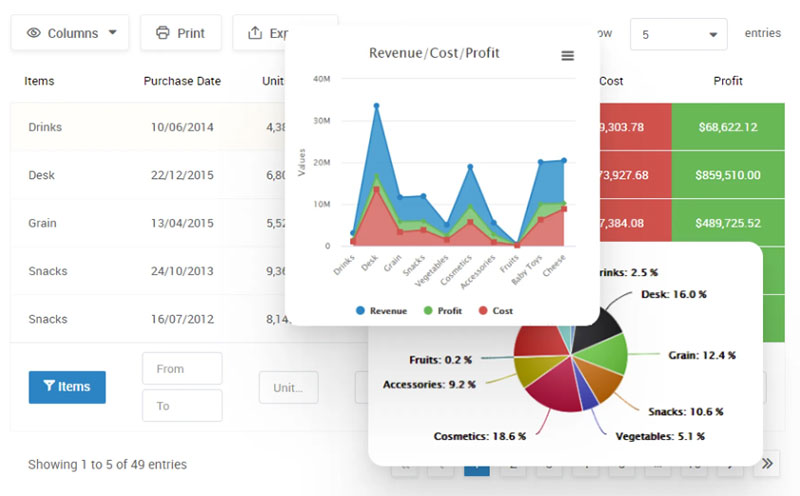
Verdict: wpDataTables is a WordPress plugin that turns spreadsheet or database data into interactive tables and charts inside the same dashboard. It suits site owners who already store data in WordPress and want charts without hiring a developer or leaving wp-admin.
Best for: WordPress site owners and agencies managing recurring datasets (product catalogs, reports, dashboards) who need charts tied directly to editable tables.
Standout capability: Rather than building a proprietary renderer, wpDataTables layers a no-code interface over established JavaScript chart libraries, so charts inherit each engine’s full feature set.
- Excel-style spreadsheet editor built into wp-admin
- Five chart rendering engines: Google Charts, Highcharts, Chart.js, ApexCharts, and Highcharts Stock
- Import from CSV, Excel, MySQL, or Google Sheets
- Conditional formatting and formula columns
- Server-side processing for tables past a million rows
Pricing: Three paid annual tiers (Starter, Standard, Pro) licensed per domain, with Standard the entry point for Highcharts and ApexCharts rendering; every purchase carries a 15-day money-back guarantee.
- No separate charting plugin needed once tables exist
- Five engines cover more chart types than most single-library competitors
- Front-end editing lets visitors submit their own rows
- The free version renders through Google Charts, with the other four engines on the paid tiers
- Advanced formatting still asks for basic CSS knowledge
Our experience / evidence: wpDataTables reports more than 80,000 professionals building tables and charts on WordPress with it (wpDataTables, 2026), a meaningfully larger footprint than most dedicated chart-only plugins.
Why it’s on this list: Most chart generator roundups treat WordPress as an afterthought. wpDataTables is the rare option where a chart shares its data source with a live, editable table, which is the setup most business sites already run on. The full feature list covers what lands on each tier.
Chart.js – Best for developers who want a free, lightweight charting library
Verdict: Chart.js is an open-source, canvas-based charting library built for developers who need standard chart types without licensing costs or vendor lock-in. It fits any JavaScript project where bundle size matters more than an exotic chart catalog.
Best for: Front-end developers adding a handful of standard charts, bar, line, pie, radar, to a custom-built site or app.
Standout capability: A gzipped bundle under 70KB, small enough to drop into performance-sensitive pages without denting load times.
- Canvas rendering with smooth built-in animation
- Responsive by default across screen sizes
- Plugin ecosystem for zoom, annotations, and data labels
- Official wrappers for React, Vue, and Angular
Pricing: Free forever under the MIT license. There is no paid tier, since Chart.js is maintained by its open-source contributor community.
- No licensing fees at any scale
- Large plugin ecosystem fills gaps in the core library
- Well-documented for common chart types
- Fewer built-in chart types than commercial engines like Highcharts
- Deep customization sometimes means writing plugin code, not toggling a setting
Our experience / evidence: Chart.js pulls more than 11 million weekly npm downloads as of 2026 (pkgpulse.com, 2026), putting it among the most-installed charting libraries in the JavaScript ecosystem.
Why it’s on this list: Chart.js earns its spot by staying deliberately narrow. It resists feature creep, which keeps the bundle small, something Highcharts and Google Charts don’t prioritize the same way.
Google Charts – Best for quick, no-cost charts inside any web page
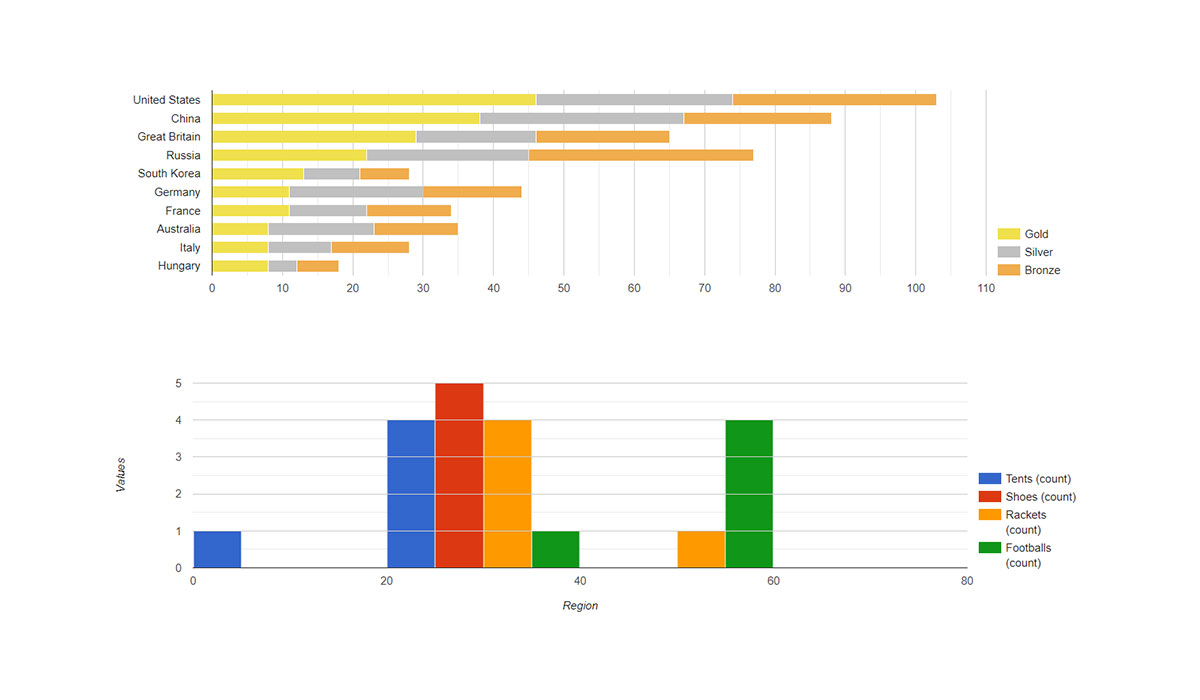
Verdict: Google Charts is a free, browser-rendered charting service maintained directly by Google, drawing charts as SVG or HTML5 with no download or build step. It’s the fastest route to a chart on a page that has no existing JavaScript build pipeline.
Best for: Internal tools, prototypes, and simple sites where a developer wants a chart live in minutes without an npm install.
Standout capability: Zero setup. A single script tag loads the library straight from Google’s servers, so there is nothing to bundle or self-host.
- Wide format support: bar, line, pie, gauge, geo, candlestick, and more
- Free Google Maps integration for geo charts
- Automatic responsive scaling
- Direct data binding from Google Sheets
Pricing: Completely free, with no paid tier. Google’s own documentation says the service keeps shipping new releases every few months and has no plans to charge for it.
- No cost at any scale
- Loads straight from Google’s CDN
- Works without any front-end framework
- No official support channel beyond a public forum
- Fewer new chart types added in recent years than newer libraries
Our experience / evidence: Google’s documentation describes the library as continually improved through community-reported issues on a public tracker rather than a formal support contract, which fits its role as a free utility rather than a commercial product.
Why it’s on this list: Google Charts is the default answer when the requirement is free and fast, not feature-complete. It earns its place for that narrow but common use case, not for chart variety.
Highcharts – Best for commercial products that need a polished, licensed chart engine
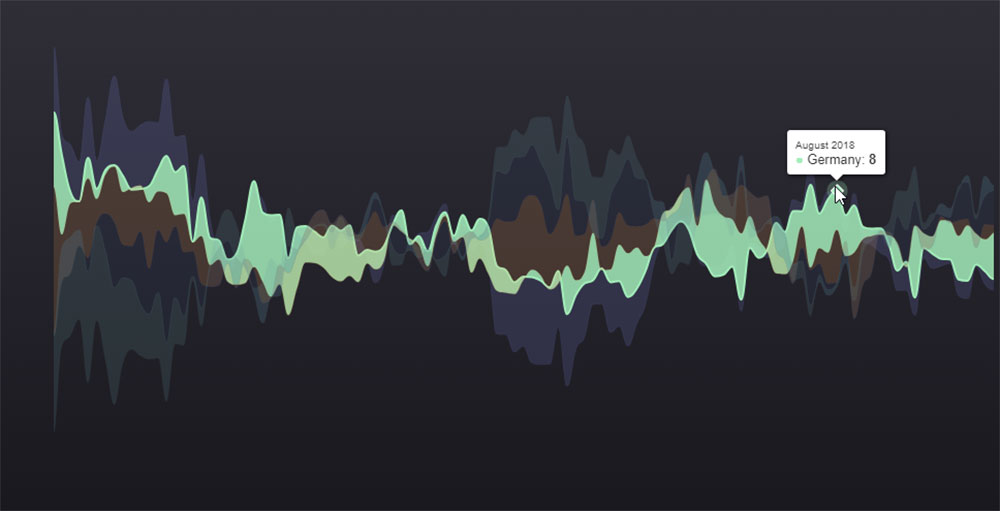
Verdict: Highcharts is a commercial JavaScript charting library known for an unusually broad catalog of chart types and consistent visual polish out of the box. It suits commercial products and enterprise tools where a paid license is acceptable in exchange for wider chart coverage and real support.
Best for: Software vendors and enterprise teams embedding charts inside a paid product, where “free for personal use only” licensing isn’t an option.
Standout capability: The largest chart-type catalog among the major JavaScript engines, including stock, gauge, and Gantt charts alongside standard types.
- SVG rendering for crisp charts at any zoom level
- Dedicated Highcharts Stock module for financial charts
- Built-in accessibility module
- Official support contracts tied to the license
Pricing: A single-developer annual license for Highcharts Core starts near $490 per year for one SaaS or web application (ComponentSource, 2026); the library is free for personal, non-commercial use.
- Deepest chart-type catalog of any major engine
- Official paid support, unlike community-only libraries
- Consistent default styling needs less custom CSS
- Licensing cost scales with developers and products, which adds up for larger teams
- Commercial use without a license breaches the terms even in internal tools
Our experience / evidence: Independent library comparisons consistently rank Highcharts ahead of Chart.js and ApexCharts on total chart-type count, at the cost of a larger minified bundle.
Why it’s on this list: Highcharts is the option for teams that would rather pay for coverage and support than assemble plugins to patch the gaps in a free library.
ApexCharts – Best for modern, animated charts with minimal setup
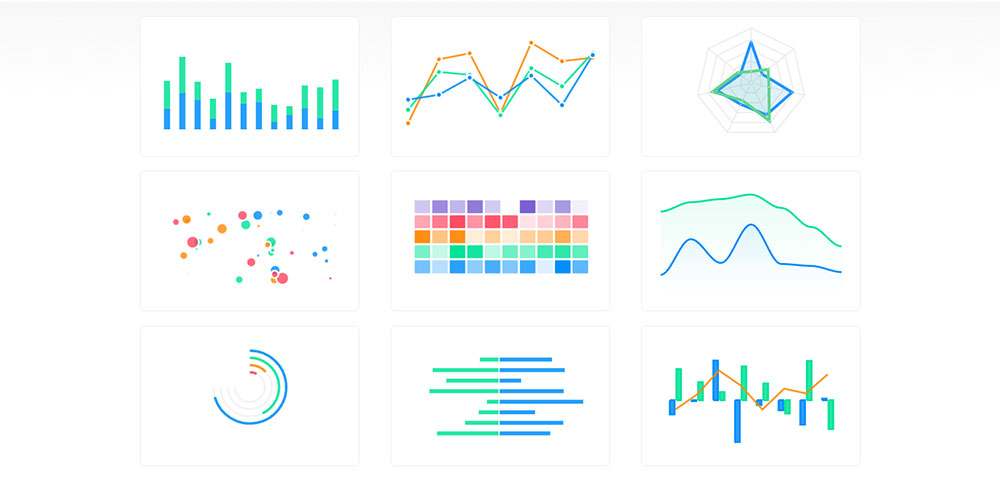
Verdict: ApexCharts is a free, open-source library built around SVG rendering and built-in animation, aimed at developers who want a modern look without writing custom transition code. It works well for dashboards where charts update live and should animate smoothly between states.
Best for: Dashboard builders who want animated, interactive charts (zoom, pan, live updates) without paying for a commercial license.
Standout capability: Animation and interactivity (zoom, pan, brush selection) ship by default, not bolted on through a plugin.
- Mixed chart types on one canvas, bar plus line, for example
- Real-time data updates without a full re-render
- Built-in dark mode support
- React, Vue, and Angular wrappers maintained alongside the core library
Pricing: Free under the MIT license, with no enterprise tier or paid support contract.
- No licensing cost, unlike Highcharts
- Smoother default animation than Chart.js
- Good documentation with live, editable examples
- Smaller chart-type catalog than Highcharts
- Community-only support means slower fixes for edge-case bugs
Our experience / evidence: Side-by-side library comparisons consistently place ApexCharts between Chart.js and Highcharts on bundle size, trading some of Chart.js’s minimalism for built-in interactivity.
Why it’s on this list: ApexCharts fills the gap between free-but-plain and featured-but-paid, which is exactly where a lot of dashboard projects sit.
Here’s how those four engines stack up on the traits that usually decide the choice:
| Engine | License | Standout trait | Typical user |
|---|---|---|---|
| Chart.js | MIT (free) | Smallest bundle size | Front-end developers |
| Google Charts | Free, Google-hosted | Zero setup, no build step | Quick internal dashboards |
| Highcharts | Commercial, free for personal use | Largest chart-type catalog | Commercial products |
| ApexCharts | MIT (free) | Built-in animation | Modern dashboards |
Datawrapper – Best for journalists and publishers embedding charts in articles
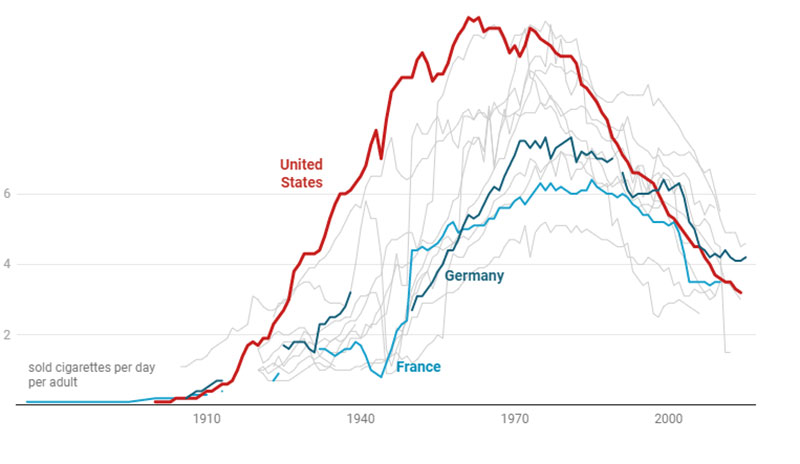
Verdict: Datawrapper is a browser-based chart and map tool built for publishing inside news articles and reports, prioritizing speed and clean defaults over deep customization. It suits newsroom and communications teams that need a chart live in minutes, not a fully custom visualization.
Best for: Journalists, communications teams, and researchers publishing charts inside articles or public reports on a deadline.
Standout capability: Publication-ready defaults. Charts look finished without manual styling, which matters when the person building the chart isn’t a designer.
- Direct paste-in from Excel or Google Sheets
- Responsive, mobile-first embeds
- Locator and choropleth map builder
- Built-in color-blind-safe palette checker
Pricing: A free plan covers unlimited charts with PNG export and basic embedding; team plans with white-labeling and collaboration start near $499 per month (Toolradar, 2026).
- Fastest path from spreadsheet to publishable interactive charts
- Strong default accessibility and color choices
- Published charts stay live indefinitely
- Fewer chart types than a full JavaScript library
- Less pixel-level styling control than hand-coded charts
Our experience / evidence: Datawrapper’s own customer list includes BuzzFeed News and Vox, both of which embed its charts directly inside published articles rather than building custom in-house tooling.
Why it’s on this list: Datawrapper solves one specific problem, getting a decent chart published fast, better than general-purpose tools that need more setup for the same result.
Infogram – Best for marketers building infographics from data
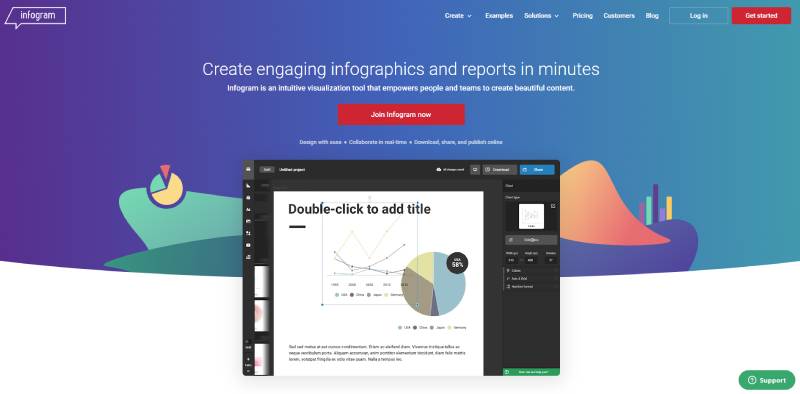
Verdict: Infogram combines chart building with infographic design, letting marketers drop live charts into templated layouts instead of building a chart and a graphic separately. It’s built for content and social teams that need a finished visual, not a raw chart embed.
Best for: Marketing and content teams producing branded infographics, reports, or social graphics that combine charts with design elements.
Standout capability: Charts and design templates share one editor, so a bar chart can sit inside a full infographic layout without exporting and re-importing.
- 37+ interactive chart types plus 550+ map types
- Drag-and-drop template library
- Direct publish-to-web with an option to embed a chart on any blog or site
- Team branding controls on paid tiers
Pricing: A free Basic plan is available; the Pro plan runs $19 per month billed annually and removes Infogram branding (Toolradar, 2026).
- Combines chart-building and graphic design in one tool
- Large template library speeds up social content
- Simple publish-and-embed workflow
- Free plan limits are felt quickly once output picks up
- Less suited to complex data than a dedicated BI tool
Our experience / evidence: Infogram’s free Basic plan caps out at 10 projects with mandatory branding, while the $19 per month Pro tier unlocks 100 projects and removes it (Toolradar, 2026), a jump that matters fast once a team publishes more than a handful of graphics a month.
Why it’s on this list: Infogram treats the chart as one element of a finished graphic, not the end product, which most pure charting libraries don’t attempt.
Flourish – Best for animated data storytelling and scrollytelling
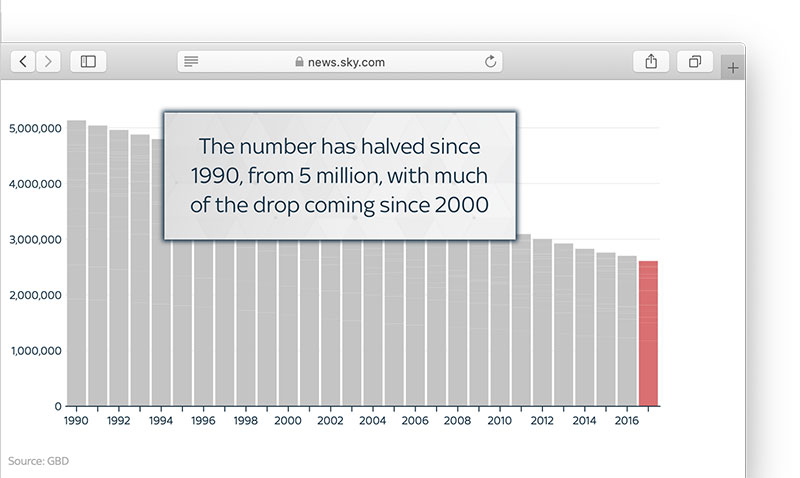
Verdict: Flourish is a browser-based visualization tool built around animated and scroll-driven charts, aimed at teams telling a story with data rather than reporting a static number. It’s strongest when the goal is audience engagement, not internal analysis.
Best for: Newsrooms, NGOs, and educators building public-facing data stories meant to be read start to finish.
Standout capability: A built-in story mode ties multiple charts to scroll position, so a reader moves through a data narrative without clicking anything.
- Animated bar chart races and network graphs among its unusual types of charts
- Template-based editor with minimal custom code
- Live data connections to Google Sheets
- Public gallery of remixable templates
Pricing: A free public tier covers unlimited public projects with Flourish branding; paid plans for private projects start near $15 per user per month (The Bricks, 2025).
- Chart types (bar races, network diagrams) most competitors skip
- Scrollytelling built in rather than hand-coded
- Strong template gallery to start from
- Free tier publishes projects publicly by default, which doesn’t suit confidential data
- Less suited to routine internal reporting than Datawrapper or Infogram
Our experience / evidence: Flourish’s own template gallery groups templates by story type rather than chart type, a small detail that reflects its focus on narrative over raw charting.
Why it’s on this list: Flourish covers a format gap, animated and scroll-based storytelling, that the more form-driven tools on this list don’t really attempt.
Tableau – Best for enterprise teams analyzing large datasets
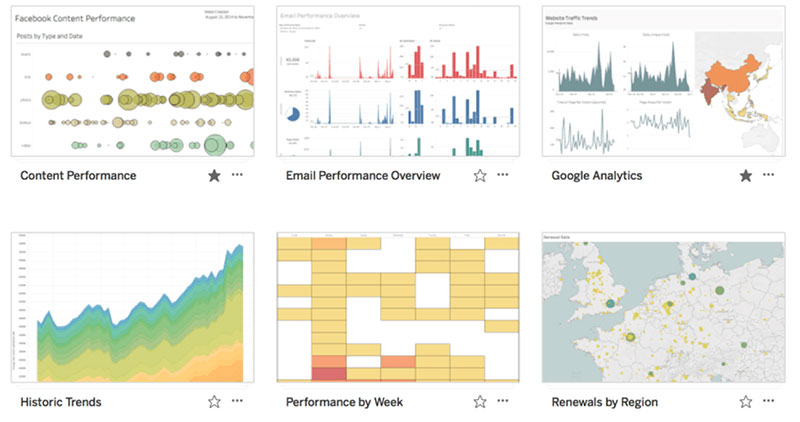
Verdict: Tableau is a full business intelligence platform where chart-building is one part of a larger data exploration and dashboarding workflow. It fits teams working with large, complex, or frequently updated datasets that need analysis, not just a finished chart image.
Best for: Data teams and enterprises building interactive dashboards on top of databases, warehouses, or large exported datasets.
Standout capability: Live connections to databases and warehouses mean charts and dashboards update automatically as underlying data changes, with no manual re-export.
- Drag-and-drop dashboard builder
- Live and extract-based connections to dozens of data sources
- Row-level security for shared dashboards
- Calculated fields for on-the-fly metrics
Pricing: Plans start around $15 per user per month for viewer-level access, with full Creator licenses closer to $70 per user per month for building new dashboards (The Bricks, 2025).
- Handles far larger datasets than browser-based chart tools
- Strong access controls for sharing dashboards company-wide
- Deep library of chart and map types built for analysis
- Steeper learning curve than anything else on this list
- Total cost climbs fast once multiple Creator seats are needed
Our experience / evidence: Reviewers consistently describe Tableau’s setup and data-modeling stage as the main barrier for teams moving over from spreadsheet-based charting tools.
Why it’s on this list: Tableau is the ceiling here, what a team upgrades to once “chart generator” stops being enough and the real need is ongoing data analysis.
Canva – Best for quick, design-forward charts for social and marketing
Verdict: Canva is a general design platform with a chart maker built into its broader drag-and-drop editor, aimed at people who need a chart to match an existing brand look. It works best when the chart is one element of a social post, deck, or one-pager, not a standalone data tool.
Best for: Marketers, social media managers, and small business owners who need a branded chart to drop into a wider design.
Standout capability: The chart tool shares the same editor, fonts, and color palette as every other design type on the platform, so branding stays consistent with no manual matching.
- Chart types built into the same editor as flyers and social posts
- Brand kit applies saved colors and fonts to new charts automatically
- Large stock photo and icon library
- One-click resizing across formats
Pricing: A free tier is available with over a million templates; the single-user Pro plan runs $18 per month, or about $12 per month billed annually (Designrr, 2026).
- Charts match a brand’s visual identity with no extra design work
- Fastest option for non-analytical, presentation-style charts
- Huge asset library beyond just charts
- Far fewer chart types and customization options than a dedicated charting library
- Not built for live data connections or frequently updating datasets
Our experience / evidence: Canva reports more than 200 million monthly active users across its design tools (CostBench, 2026), the largest audience of any tool on this list, though most aren’t using its chart feature specifically.
Why it’s on this list: Canva earns its spot for a narrow but common job, making a chart look like it belongs in a brand deck, not for depth of data handling.
When a chart generator isn’t the right fit
None of the tools above replace statistical software when the job is hypothesis testing, regression modeling, or anything past a visual summary.
A chart generator also falls short once the real need is querying and joining large relational datasets before anything gets drawn. That job belongs to a database tool or a full BI platform’s modeling layer, with the chart as the last step, not the whole task.
What Is a Chart Generator?
A chart generator is a web-based or software tool that converts raw data into a styled, finished chart.
It sits between a spreadsheet and a full coding environment, producing a chart without requiring a design tool or a programming language.
The category spans four platform types: web apps that run entirely in a browser, desktop software installed locally, browser extensions, and JavaScript libraries developers wire into their own pages.
- Web app: no install, data uploaded or pasted directly into the browser
- Desktop software: works offline, ties into local files
- Browser extension: adds chart creation to an existing workflow, like a spreadsheet tab
- JavaScript library: developer-controlled, embedded directly into a site or app
Compared to a spreadsheet’s built-in chart tool, a dedicated chart generator usually offers more chart types and finer styling control.
Compared to a full business intelligence platform, it skips data modeling and live database queries in favor of speed and simplicity.
What Types of Charts Can a Chart Generator Create?
Most chart generators group their output by the job the chart does, not by an alphabetical list of names.
Four jobs cover almost everything: comparison, trend, distribution, and composition.
| Chart type | Data structure | Best use case | Common pitfall |
|---|---|---|---|
| Bar chart | Categorical vs. numeric | Comparing discrete categories | Too many bars crowd the axis |
| Line chart | Time-series, continuous | Showing change over time | Non-sequential data on the x-axis |
| Pie chart | Parts of a whole | Proportion, few categories | More than 5 or 6 slices |
| Scatter plot | Two continuous variables | Correlation between variables | Overplotting with dense data |
Charts for Comparison
Comparison charts answer “which is bigger” or “which ranks higher” questions.
- Bar charts and their vertical variant, column charts
- Grouped and stacked bar charts for comparing sub-categories at once
They work best under roughly eight categories. Past that, the bars get too thin to read at a glance.
Charts for Trends Over Time
Time-based data needs a chart that preserves sequence, not just magnitude.
Line charts handle this by default, plotting continuous values against a time axis.
Area charts do the same job while also emphasizing volume beneath the line, which helps when the total matters as much as the trend.
Charts for Distribution and Composition
Composition: pie charts and donut charts, limited to a handful of slices before they stop being readable.
Distribution: histograms group continuous data into ranges, while scatter plots show how two variables relate to each other across every individual data point.
Free vs Paid Chart Generators: What’s the Real Difference?
Free and paid tiers rarely differ in core charting ability. They differ in what they gate around it.
What free tiers typically cap:
- Total chart or project count
- Access to premium rendering engines or advanced chart types
- Export resolution and file formats
- Branding removal, most free plans stamp the tool’s logo on the output
Infogram’s free Basic plan caps projects at 10 with mandatory branding, while its paid Pro tier unlocks 100 projects and removes it (Toolradar, 2026).
That kind of jump is typical, not unusual, across the category.
Reasons the free tier is enough:
- One-off charts for a single report or presentation
- Internal use where a watermark or logo doesn’t matter
- Standard chart types (bar, line, pie) cover the need
Reasons to pay:
- Charts appear on a public site or client-facing document
- A team needs shared workspaces or collaborative editing
- Volume regularly exceeds the free project or export cap
What Mistakes Cause Chart Generators to Produce Misleading Charts?
The tool rarely causes the problem. The data choices and design choices feeding it do.
Three findings frame the scale of the issue:
- 48% of survey respondents made mistakes interpreting simple line and bar charts in a representative study of Austrian adults (MAVIL study, 2024)
- Truncating a y-axis non-monotonically is very likely to impair a reader’s ability to judge relative growth, while monotonic truncation performs similarly to no truncation (Long and Kay, CHI 2024)
- A 2025-to-2026 steel production chart with a y-axis starting near the data’s minimum made a 1.24% year-over-year increase visually resemble a 100% jump (Lead Stories fact-check, 2026)
Data-Driven Mistakes
These come from the numbers themselves, before a single style setting gets touched.
Truncated axes exaggerate small changes into dramatic-looking ones, the exact mechanism behind the steel production example above.
Cherry-picked date ranges and unlabeled units round out the most common misleading statistics patterns chart generators inherit from bad input data.
Design-Driven Mistakes
Wrong chart type for the data structure tops this list, a scatter plot forced into a pie chart’s job, for instance.
Cramming too many categories into one chart and using low-contrast colors round out the pattern.
These show up constantly in misleading data visualization examples collected from both newsrooms and corporate reporting.
When Does a Chart Generator Stop Being the Right Tool?
A chart generator draws a picture from data someone else already prepared. It does not analyze that data.
Four situations push past what the category is built for:
- Statistical modeling. Regression, hypothesis testing, and other descriptive statistics work belongs in dedicated statistical software, not a chart generator
- Large or live relational data. Querying and joining data across multiple tables before anything gets drawn is a job for a database tool or a BI platform’s modeling layer
- Fully custom interactivity. Anything beyond a template’s built-in options needs hand-written code, not a generator’s settings panel
- Compliance-sensitive data. Confidential records generally shouldn’t leave an internal system for a third-party web tool
The global business intelligence software market was valued at $27.7 billion in 2024 and is projected to reach $44.9 billion by 2033 (SkyQuest, 2026), a scale of investment that reflects how much analysis work sits above what any chart generator attempts.
Once big data visualization or ongoing analysis becomes the actual job, the right move is a BI platform, not a better chart generator.
FAQ on Chart Generators
What’s the practical difference between a chart generator, a chart library, and a full BI tool?
A chart generator offers a no-code interface for a finished chart. A chart library such as Chart.js requires a developer to write rendering code for the same output. A BI platform adds live data querying and dashboards on top.
Can chart generators connect directly to a live database or API?
Most browser-based chart generators pull from static files (CSV, Excel, Google Sheets) rather than a live database. Some, including wpDataTables, support direct API and MySQL connections, refreshing the chart automatically whenever the underlying data changes.
Do chart generators work on mobile devices?
Most modern chart generators render responsively, resizing charts to fit a phone or tablet automatically. Editing is harder on mobile than desktop, since dragging data ranges and adjusting fine styling works better with a mouse and keyboard.
Is it safe to upload sensitive or confidential data to an online chart generator?
It depends on the tool’s hosting and data policy, not the category itself. Confidential or regulated data is safer in a desktop tool or an internally hosted chart library than pasted into a third-party web app with unclear data-retention terms.
What Does Switching Chart Generators Later Cost?
Switching chart generators after charts are already embedded across a site costs more in rebuilding time than in any subscription fee, because every chart tied to a specific rendering engine has to be recreated rather than simply reconnected to new data.
Free rendering libraries draw far larger install bases than the licensed engines charging per developer, and that gap explains the real threshold: once one sits behind dozens of live charts, replacing it costs developer hours, not software fees.
Teams that pick a chart type and rendering engine deliberately from the start accept a narrower initial choice in exchange for avoiding that rebuild, which is why how to choose the right chart type for your data matters more before launch than after.