Table of Contents
Video tutorial
What is Grouping in wpDataTables
You group rows in a WordPress table with wpDataTables by turning one column into a “group column”, so its repeating values become group headers instead of an ordinary column. Row grouping is only available for non-server-side tables.
What is grouping in wpDataTables? TLDR
Grouping uses one column’s values to organise the rows instead of showing that column on its own.
- Row grouping feature is only available for non-server-side tables.
- If one column of your table contains similar values for many rows, it often makes sense to use it as a “group column”. This means it will not be displayed as a column, but its values will be used to group the rows. Each group will be marked with one row with joined cells above containing the group value.
- In the example on the left, the ‘group’ is the exam name, which is based on the information in the second column (which is hidden when you enable grouping).
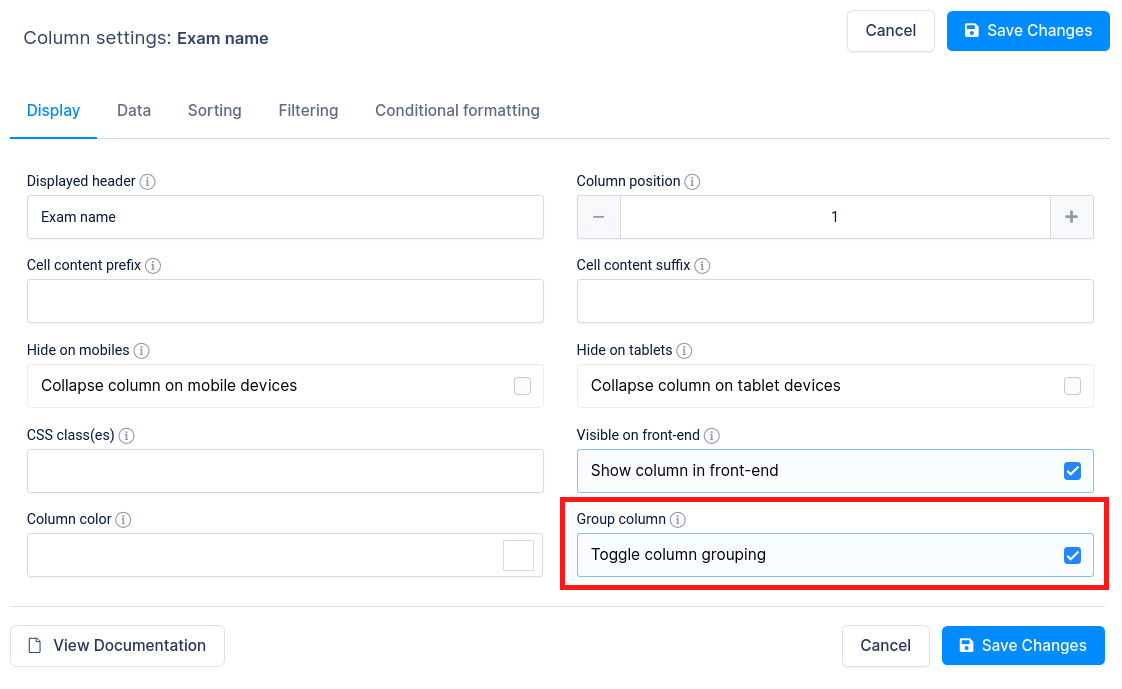
- To use this feature, you need to tick the “Group column” checkbox for one of the columns on the column settings panel under the “Display” tab. When you enable grouping for the column, it will disappear, and you will be able to access column settings only from complete column list modal by clicking on the “Column list” button above the table.
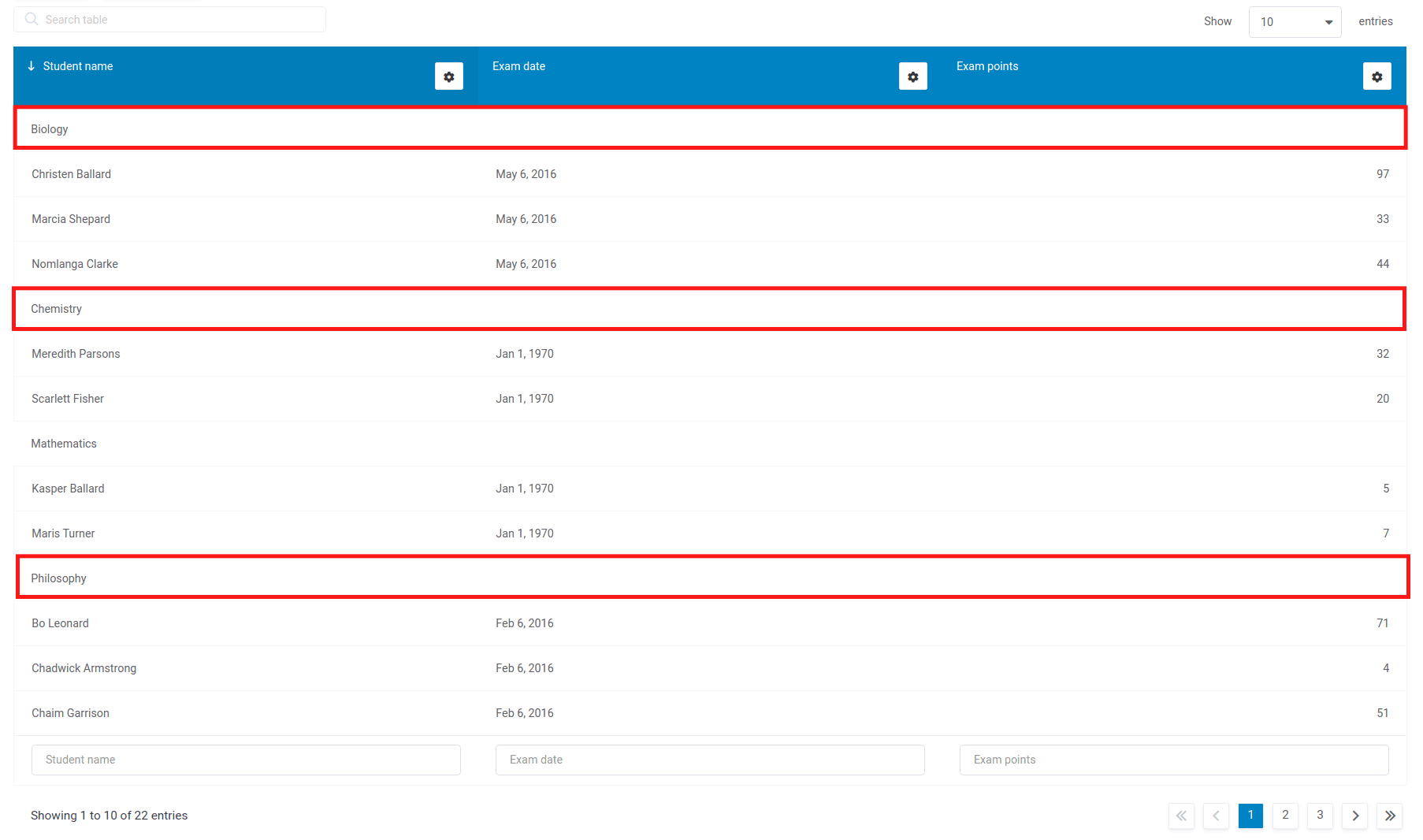
If one column of your table contains similar values for many rows, it often makes sense to use it as a “group column”. This means it will not be displayed as a column, but its values will be used to group the rows. Each group will be marked with one row with joined cells above containing the group value.
In the example on the left, the ‘group’ is the exam name, which is based on the information in the second column (which is hidden when you enable grouping).
To use this feature, you need to tick the “Group column” checkbox for one of the columns on the column settings panel under the “Display” tab. When you enable grouping for the column, it will disappear, and you will be able to access column settings only from complete column list modal by clicking on the “Column list” button above the table.
Where can I learn about related table features?
- Configuration settings
- Create editable tables and fill in the data manually
- Create non-editable tables from Excel files
- Create non-editable tables from Google Spreadsheets
- Calculation functions (totals row)
- Creating editable tables and filling table data manually
- Creating non-editable tables from Excel files
- Creating non-editable tables from Google Spreadsheets
- String (text) columns
- Float columns
- Date columns
- DateTime columns
- Time columns
- Image columns
- URL link columns
- E-mail link columns
- Currency/price columns
- Formula (calculated) columns
- Coloring and styling columns
- Hiding (dynamic) columns
- Column types overview